Boosting Property Value With New Roofing and Paving
In the competitive world of commercial real estate, first impressions are rarely strictly visual—they are financial. A potential tenant, investor, or client forms an opinion about a property long before they step into the lobby. They judge the asset the moment they drive onto the lot and look up at the building. The exterior envelope of a commercial facility is the first handshake with the market, and unfortunately, many property owners allow that handshake to become limp and unimpressive through deferred maintenance.
While interior renovations like lobby upgrades and modern elevators often steal the spotlight in capital expenditure discussions, the true heavy lifters of asset value are the roof and the pavement. These two components serve a dual purpose: they provide the essential functional utility of protecting the structure and its occupants, and they offer a massive aesthetic signal regarding the building’s management quality. Worn, cracked asphalt suggests a lack of funds or care. A stained, patching-filled roof line suggests looming liability and potential water damage.
Investing in these exterior assets is not merely a maintenance cost; it is a strategic maneuver to boost the property’s market position. A robust, well-maintained exterior justifies higher rental rates, attracts higher-credit tenants, and significantly lowers the risk profile for future buyers. This guide explores how property owners and managers can strategically navigate the complex process of exterior renovation to maximize Return on Investment (ROI) and secure the long-term value of their real estate assets.
Start with a Comprehensive Health Check of Your Exterior
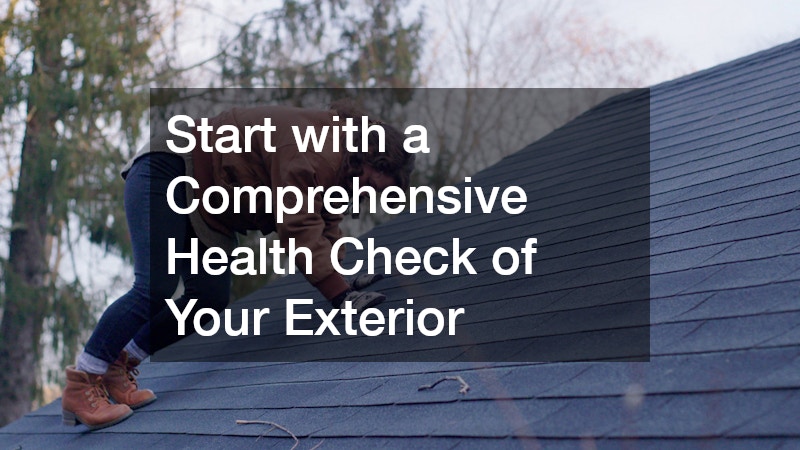
Before allocating a single dollar to capital improvements, you must establish a scientifically accurate baseline of your property’s current condition. Many property managers rely on casual visual assessments—walking the perimeter or looking out a window—but true asset management requires data, not just observation. The degradation of roofing and paving materials often happens below the surface, invisible to the untrained eye until catastrophic failure occurs.
To build a realistic budget and scope of work, you must move beyond the surface level. For your building’s top layer, this means scheduling a formal assessment. A professional assessment will identify not just active leaks, but the “cancer” of a roof system: trapped moisture. Over time, water can migrate through small punctures in the membrane and saturate the insulation below. Once insulation is wet, it loses its R-value (thermal resistance) and can degrade the steel or wood deck structure underneath.
A comprehensive evaluation often involves infrared thermography. This technology captures thermal images of the roof at night, highlighting areas where wet insulation retains heat longer than dry insulation. This allows you to map exactly where the damage is. Following the thermal scan, a qualified professional will perform “core cuts”—physically removing small cylinders of the roof system to verify the layers, the condition of the insulation, and the integrity of the deck.
Key Data Points to Gather:
- Moisture Saturation Levels: What percentage of the insulation is wet? If it is under a certain threshold, you might be able to repair rather than replace.
- Membrane Age and Elasticity: Is the material brittle? Has it shrunk and pulled away from the parapet walls?
- Drainage Efficiency: Is there standing water (ponding) 48 hours after rain?
This data forms the foundation of your Request for Proposal (RFP). By having a third-party expert or a trusted roof contractor perform this deep-dive analysis, you ensure that you are bidding out the correct scope of work. You avoid the common pitfall of paying for a simple overlay when the underlying insulation is saturated, and conversely, you avoid paying for a full tear-off when a restoration would have sufficed.
Furthermore, a documented roof inspection history is a powerful tool during property appraisal or sale. It demonstrates to potential buyers that the asset has been rigorously monitored. It shifts the narrative from “this roof is old” to “this roof has been actively managed and maintained,” which can preserve equity during closing negotiations.
Recognizing the Tipping Point: Repair vs. Full Overhaul
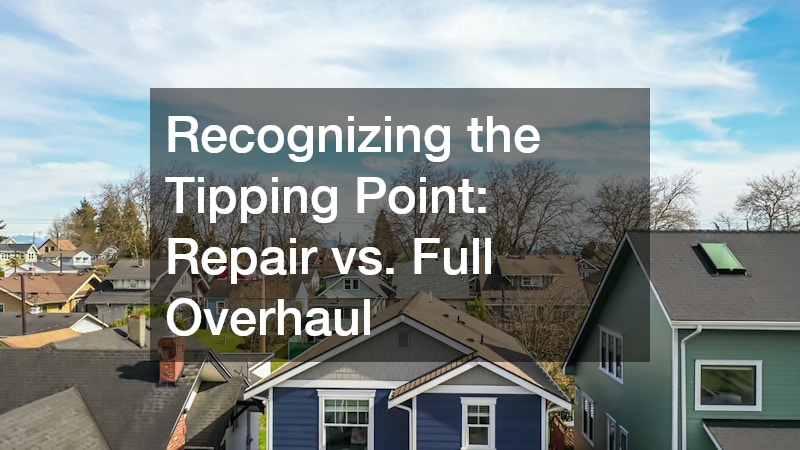
Once the data is collected, the property manager faces the most critical financial decision in the process: repair, restore, or replace. This decision should not be based on gut feeling, but on a calculation of lifecycle costs. The industry generally adheres to the “50% Rule.” If the cost of necessary repairs and rehabilitation exceeds 50% of the cost of a total replacement, or if more than 25-30% of the insulation is saturated with moisture, a full replacement is usually the wiser financial choice.
Continuing to patch a failing system is often described as “throwing good money after bad.” While the upfront cost of a repair is lower, the frequency of repairs on a dying system accelerates exponentially. Each time a technician is dispatched to chase a leak, you incur call-out fees, material costs, and the internal administrative cost of managing the crisis. More importantly, repeated leaks damage tenant relationships and can ruin interior inventory, leading to liability claims that far outstrip the cost of a new roof.
When you opt for a commercial roof replacement, you are doing more than just stopping leaks; you are resetting the warranty clock and upgrading the building’s performance. Modern roofing systems have advanced significantly in the last two decades. New single-ply membranes like TPO (Thermoplastic Polyolefin) and PVC (Polyvinyl Chloride) offer superior reflectivity. A white, reflective roof can lower the surface temperature of the roof by 50 to 80 degrees Fahrenheit compared to a black roof. This reduction in heat absorption translates directly to lower air conditioning bills, a metric that increases Net Operating Income (NOI).
However, selecting the right system requires specialized knowledge. A qualified commercial roofer will analyze the building’s specific needs. For example, a restaurant with significant grease exhaust on the roof may need a PVC system, which is resistant to animal fats and oils, whereas a warehouse might be perfectly served by a standard TPO system.
Factors Influencing the Replacement Decision:
- Remaining Service Life: If the current system has only 1-2 years of life left, a restoration coating might extend it by 10 years, delaying the large capital outlay of a replacement.
- Code Compliance: New building codes often require higher levels of insulation. A replacement allows you to bring the building up to current energy codes, which may be eligible for rebates.
- Photovoltaic Readiness: If you plan to install solar panels in the future, you must have a new or high-quality roof underneath them. You cannot install a 25-year solar asset on a 5-year roof.
Making the right call between repair and replacement requires a partner who understands the long-term view of asset management, not just a salesperson looking for a quick commission.

Vetting Partners: Ensuring Quality and Accountability
The construction industry is unfortunately rife with variance in quality. For a commercial property owner, selecting the wrong vendor can lead to litigation, voided warranties, and projects that drag on for months. Therefore, the vetting process for exterior renovation partners must be rigorous and objective.
When soliciting bids, it is imperative to use a “leveling” process. Often, property managers receive three proposals with three vastly different prices because the scopes of work are not identical. One proposal might include permit fees, crane rental, and night work to minimize disruption, while the low bidder has excluded all of those necessary items. You must ensure you are comparing apples to apples.
Look for companies that have a tangible footprint in your community. Established roofing companies will have a physical office, a warehouse, and a fleet of branded vehicles. Be wary of “storm chasers” or entities that operate strictly out of a P.O. Box or a truck. You want a partner who will be there five years from now to honor the warranty, not one who dissolves their corporate entity after the project is complete.
The Vetting Checklist:
- Manufacturer Certifications: Top-tier manufacturers (like Carlisle, Firestone, GAF, or Johns Manville) do not sell their best warranties to just anyone. They authorize contractors who meet strict training and financial requirements. If a contractor is not “Master” or “Platinum” level certified, they cannot offer you the NDL (No Dollar Limit) warranty that you should demand for a commercial asset.
- Safety Record: Ask for the company’s EMR (Experience Modification Rate). An EMR of 1.0 is industry average; anything lower indicates a better-than-average safety record. High EMR scores suggest unsafe practices, which opens you up to massive liability if an accident occurs on your property.
- Financial Stability: For large projects, you may want to ask for a letter of bonding capacity. This proves the contractor has the financial backing to complete the project and pay their suppliers, ensuring no mechanics liens are placed on your building.
Furthermore, dig into the specialization of the roofing contractor. Commercial flat roofing is a completely different trade from residential steep-slope roofing. It requires different tools, different safety protocols, and a different understanding of building science. Ensure your partner specializes in the specific type of asset you own.
Finally, verify their references. Do not just ask for a list of names; ask for a list of projects completed in the last 12 months that are similar in size and scope to yours. Call those property managers and ask specific questions: Did they finish on time? Was the job site kept clean? Did the final invoice match the proposal?
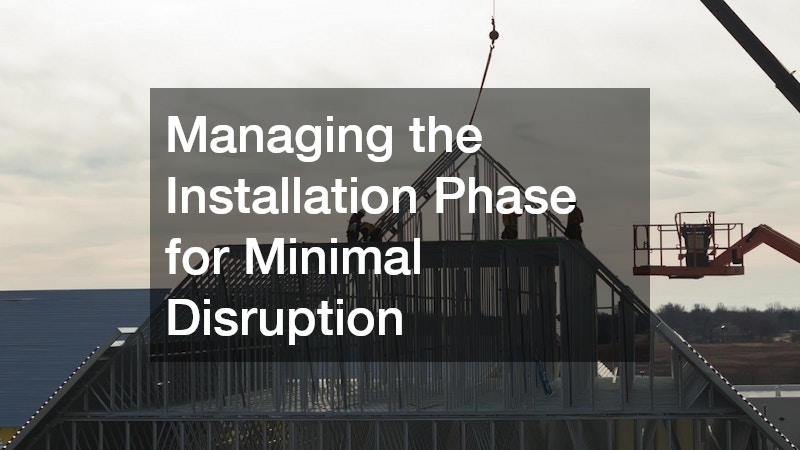
Managing the Installation Phase for Minimal Disruption
Once the contract is signed, the focus shifts to logistics. A major exterior renovation is an invasive procedure for a building. It involves heavy machinery, noise, odors, and changes to traffic flow. If mismanaged, it can infuriate tenants and disrupt business operations. The goal of the installation phase is to render the construction as invisible as possible to the daily users of the facility.
Effective project management starts with a pre-construction meeting. This meeting should include the property manager, the lead foreman, and key tenant representatives. This is the time to establish the “rules of engagement.” Where will materials be staged? Where will the dumpsters go? What are the allowable work hours? For sensitive tenants, such as medical offices or call centers, you may need to negotiate work schedules that avoid the noisiest activities (like mechanical fastening or vacuuming gravel) during peak business hours.
Safety is the non-negotiable priority during installation. Professional roofers will implement a comprehensive safety plan that includes perimeter warning lines, safety monitors, and fall protection gear. On the ground, they must protect the public from falling debris. This usually involves setting up caution tape zones, overhead chutes for debris removal, and designated pathways for building entry.
Minimizing Tenant Friction:
- Communication: Send out a project schedule to all tenants well in advance. Weekly updates via email can keep everyone informed about what section of the building is being worked on.
- Odor Management: Some adhesives and asphalt products have strong odors. A quality installation team will coordinate with your HVAC technician to close fresh air intakes during specific application times to prevent fumes from being sucked into the building.
- Parking Management: Clearly mark which parking spots will be used for cranes and staging. Ensure these are not the prime spots reserved for your tenants’ customers.
The quality of the roofing installation is heavily dependent on weather and workmanship. A good crew will never tear off more roof than they can make watertight in a single day. “Night seals” or temporary tie-ins are critical to prevent water from entering the building if a sudden storm hits overnight. The project manager should be documenting the installation with daily photos, ensuring that the number of fasteners, the width of the weld seams, and the application of adhesives match the manufacturer’s specifications. This documentation is often required to issue the final warranty.
Maximizing Curb Appeal Through Strategic Pavement Upgrades
While the roof protects the asset from above, the parking lot drives the asset’s value on the ground. The parking lot is often 50% or more of the land area of a commercial property. It is the first thing a visitor interacts with, and its condition sets the tone for the entire experience. A lot riddled with potholes, fading striping, and crumbling curbs creates a negative psychological impact and presents a genuine safety hazard.
Paving maintenance, much like roofing, falls into categories of preservation, resurfacing, and reconstruction. The most cost-effective strategy is preservation. This involves crack filling and sealcoating. Sealcoating acts as a sunblock for the asphalt, preventing UV rays from oxidizing the binder, which turns the pavement gray and brittle. It also provides a barrier against oil and gas spills. A fresh black sealcoat with crisp, bright striping immediately makes a property look newer and well-managed.
However, if the asphalt has “alligatored”—cracked into a pattern resembling reptile scales—the base has likely failed. In this scenario, sealcoating is useless. You need a paving contractor to perform more intensive repairs. This might involve milling (grinding off the top layer) and overlaying with new asphalt, or full-depth reclamation where the asphalt and sub-base are pulverized and reconstructed.
ADA Compliance and Liability:
Upgrading your lot is also the time to ensure you are compliant with the Americans with Disabilities Act (ADA). Codes change, and a lot striped 15 years ago is likely non-compliant today.
Upgrading your lot is also the time to ensure you are compliant with the Americans with Disabilities Act (ADA). Codes change, and a lot striped 15 years ago is likely non-compliant today.
- Slopes: Handicap spots must not have a slope greater than 2% in any direction.
- Signage: Vans require specific aisle widths and “Van Accessible” signage.
- Path of Travel: There must be a safe, accessible route from the parking spot to the building entrance.
Violations of ADA codes can result in significant lawsuits. A specialized commercial paving company will understand these legal nuances. They will know the correct paint to use (chlorinated rubber vs. water-based acrylic) for longevity and visibility. They will also understand the load-bearing requirements of your lot. A dumpster pad or a loading dock approach needs a much thicker asphalt section and potentially a concrete apron to withstand the heavy static loads of garbage trucks, whereas the employee parking area can use a lighter duty specification.
When planning these upgrades, phasing is key. You cannot shut down the entire parking lot of an operating business. The contractor must formulate a plan to pave in sections, ensuring that traffic flow is maintained and that businesses always have access to their front doors. This requires high-level coordination and traffic control, which is the hallmark of a professional commercial outfit.
The Critical Link Between Water Management and Surface Longevity
It is impossible to discuss roofing and paving in isolation because they are intimately connected by one element: water. The primary enemy of both your roof and your parking lot is uncontrolled moisture. A successful exterior renovation strategy must look at the property holistically, tracing the path of water from the sky to the storm sewer.
When a roof is replaced, the drainage characteristics often change. A new tapered insulation system might move water to the scuppers faster than the old system. If that water discharges directly onto the parking lot rather than into an underground storm drain, it can wreak havoc. A concentrated stream of water falling three stories onto asphalt will erode the surface rapidly, acting like a pressure washer. In winter, this water creates dangerous ice patches on sidewalks and driveways, creating slip-and-fall liability.
Integrated Design Considerations:
- Downspout Positioning: Ensure downspouts discharge into underground leads or onto concrete splash blocks, not directly onto asphalt seams.
- Grade and Slope: The parking lot must be graded to shed water away from the building foundation. If the paving settles and water pools against the building, it can seep into the basement or destabilize the foundation.
- Catch Basin Maintenance: All that water washing off the roof and lot carries grit and debris. If catch basins are clogged, the water backs up, potentially flooding the lot and accelerating asphalt deterioration.
By coordinating the efforts of your exterior trades, you ensure that the solution for one area doesn’t become a problem for another. The goal is a unified water management system that protects the entire building envelope.
Calculating the Financial Returns of Exterior Capital Improvements
For the property owner, the ultimate justification for these large expenses is the financial performance of the asset. How does spending $200,000 on a roof and $50,000 on a parking lot translate to the bottom line?
The most direct impact is on the capitalization rate (Cap Rate). Commercial properties are valued based on their Net Operating Income divided by the Cap Rate. A lower Cap Rate (which implies a safer, higher-quality investment) yields a higher property value. When a building has a brand new roof and a pristine parking lot, it is perceived as a lower-risk asset. Buyers do not have to budget for immediate large capital expenditures (CapEx), so they are willing to pay a premium. A building with deferred maintenance commands a higher Cap Rate (lower price) because the buyer must factor in the risk and cost of immediate repairs.
The Multiplier Effect on Value:
- Tenant Retention: Turnover is the biggest killer of cash flow. Vacancy loss, leasing commissions, and tenant improvement (TI) allowances eat into profits. Tenants stay in buildings that are well-maintained. A dry building with a clean, safe parking lot keeps tenants happy, stabilizing cash flow.
- Operating Expenses: As mentioned, a new energy-efficient roof lowers utility costs. In a “Gross Lease” scenario, this directly increases the landlord’s profit. In a “Triple Net (NNN)” lease, it lowers the tenant’s total occupancy cost, making the building more attractive compared to competitors.
- Tax Advantages: Tax laws regarding capital improvements change, but provisions often exist that allow for accelerated depreciation of certain improvements. “Bonus depreciation” or Section 179 expensing can sometimes allow property owners to deduct a significant portion of the renovation costs in the first year, providing substantial tax relief. Note: Always consult with a qualified CPA or tax strategist regarding your specific situation.
In conclusion, viewing roofing and paving merely as “expenses” is a limited mindset. They are, in reality, the guardians of the asset’s value. A watertight roof and a smooth, professional parking lot signal to the world that the property is a premier asset managed by professionals. This attracts the best tenants, commands the highest rents, and ultimately secures the highest sales price when it comes time to exit the investment. By proactively managing these systems—inspecting regularly, repairing promptly, and replacing strategically—you move from a cycle of crisis management to a cycle of value creation.