What Working a Construction Site Really Teaches You About Risk
Walk onto any active construction site and you will notice something within minutes: everyone is watching something. Workers scan the ground for debris, glance up at suspended loads, and check in with each other before moving heavy equipment. That constant, low-grade vigilance is not paranoia, it is a learned skill, and it holds lessons for anyone trying to manage risk in their own life or business. Whether you are a homeowner planning a renovation, a small business owner overseeing a buildout, or simply someone curious about how risk really works, construction sites offer a masterclass worth studying.
Reading the Site Before Work Begins
Experienced crews never start a project by swinging a hammer. They start by walking the property, identifying hazards, and mapping out how materials, people, and equipment will move through the space. This upfront assessment catches problems while they are still cheap and easy to fix, rather than after someone has already been hurt or a structure has already gone up wrong. The same logic applies far beyond construction, whether you are evaluating a new business venture or inspecting a property before buying it.
A thorough site read also means understanding what temporary structures will be needed and where they will go. Many projects now rely on hoop buildings for interim storage or shelter, since these structures can be erected quickly without the permitting delays of permanent construction. Planning their placement early avoids the costly scramble of relocating materials mid-project once crews realize the layout does not work.
Managing Material Choices and Structural Loads
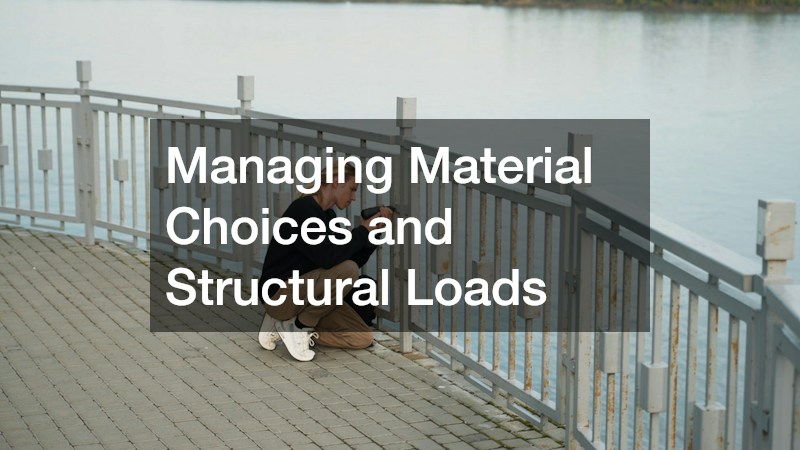
Every material decision on a job site carries a risk calculation baked into it, even if nobody says it out loud. Choosing the wrong product for a given load, weather exposure, or span can turn a minor oversight into a major structural failure down the road. A beam rated for a 20-foot span used across 24 feet, or lumber graded for interior use left exposed to the elements, doesn’t fail immediately — it fails quietly, until the day it doesn’t. Crews learn to read spec sheets the way accountants read balance sheets, because the numbers hide the actual risk. Load capacity, moisture resistance, fire ratings, and fastener compatibility all interact, and skipping one check can undo the value of getting the other three right. A contractor who swaps in a slightly cheaper grade of steel or a thinner gauge of sheathing may shave a few hundred dollars off a materials order, but that same decision can shave years off a structure’s service life. Crews learn quickly that cutting corners on materials rarely saves money once you account for repairs, delays, and liability. Rework costs on a construction project typically run two to three times higher than the cost of doing the job right the first time, once you factor in demolition, disposal, and schedule slippage. And liability doesn’t stay contained to the job site — a structural issue that surfaces five years after occupancy can trigger lawsuits, insurance claims, and reputational damage that dwarfs whatever was “saved” on the original order. This is why experienced supervisors build in margin rather than build to the exact minimum. Specifying materials rated for loads 15-20% above the calculated requirement, or choosing weather-resistant treatments even when the forecast looks forgiving, is a deliberate hedge against the unknowns — bad batches, measurement errors, future renovations — that no spec sheet can fully predict.
Roofing is one of the clearest examples of this tradeoff in action. Many commercial projects now specify roof metal decking because it offers strength and fire resistance that lighter materials cannot match, especially on larger spans where sagging or failure would be catastrophic. A gauge that saves a few dollars per square foot can mean the difference between a deck that holds its camber for thirty years and one that starts to deflect under snow load within a decade. Every material choice on a job site is really a bet on future conditions you cannot fully predict. Will the roof see hailstorms, heavy foot traffic from mechanical units, or decades of thermal cycling that loosens fasteners? Engineers build in safety factors for exactly this uncertainty, but those factors only work if the installed material matches the spec, not a cheaper substitute swapped in to hit a budget target. Choosing the right decking is not just an aesthetic or budget decision, it is a risk decision that affects everyone who works beneath that roof for decades to come. The same logic extends to load-bearing walls, beam sizing, and even the type of insulation packed between joists, since each choice shifts how the structure behaves under stress. On a construction site, you learn quickly that the cheapest option today is often just a deferred cost, and in business the pattern repeats: skimping on quality controls or vetting rarely disappears, it just resurfaces later as a bigger, less predictable failure.
Keeping Crews Healthy and Focused
Physical comfort has a bigger impact on safety than most people assume. A crew that is dehydrated, exhausted, or distracted by inadequate facilities makes more mistakes, and mistakes on a job site can escalate quickly. Site managers who invest in basic worker welfare consistently see fewer incidents, because people who are comfortable and rested pay closer attention to their surroundings.
Sanitation is a surprisingly large piece of this puzzle. Bringing in a porta potty trailer rental for a multi-week project keeps workers from wasting time traveling off-site, reduces unsanitary conditions that can spread illness, and signals that the project is being run professionally. It is a small logistical detail that pays off in fewer sick days and steadier productivity across the life of the job.
Understanding What Happens When Something Goes Wrong

No matter how careful a crew is, incidents still happen, and part of learning to manage risk is accepting that fact rather than pretending it away. A dropped tool, a slip on a wet surface, a piece of equipment that malfunctions despite regular maintenance — these things occur even on sites with strong safety cultures. The goal was never to achieve a mythical zero-incident record; it was to build systems that catch problems early and respond to them well. The difference between a well-run site and a poorly run one often shows up not in whether accidents occur, but in how quickly and transparently they are handled afterward. On a good site, a near-miss gets reported the same day, not buried out of fear of blame. That immediate reporting habit is what turns a close call into a lesson rather than a repeat incident three weeks later. Documentation, incident reports, and clear communication with everyone involved can mean the difference between a minor setback and a prolonged dispute. A thorough report captures the time, location, people involved, environmental conditions, and the specific sequence of events, rather than a vague summary written from memory days later. That level of detail matters later, whether for an insurance claim, a safety audit, or a conversation with a regulator. Communication matters just as much as paperwork. Workers need to know what happened, why, and what’s changing as a result, or the same mistake tends to resurface in a different form. Supervisors who treat incident reviews as blame-free problem-solving sessions, rather than disciplinary hearings, tend to get more honest information — and better information is what actually prevents the next incident.
Construction sites rarely have a single clear cause when something goes wrong. A fall might involve faulty scaffolding, a distracted subcontractor, inadequate signage, and a supervisor who skipped a safety check, all at once. When an injury occurs under those tangled circumstances and liability is unclear, many workers and property owners find themselves needing outside guidance to understand their rights. Consulting a personal injury lawyer early in that process can clarify what compensation is reasonable and what steps protect both the injured party and the business. A good attorney will typically look at medical records, incident reports, witness statements, and safety logs before offering an opinion on who’s responsible. They can also explain how workers’ compensation interacts with a potential third-party claim, since on a job site with multiple contractors, an injured worker may have options beyond the standard comp payout. Timing matters more than most people realize. Evidence like torn equipment or temporary signage often disappears within days, witnesses’ memories fade fast, and most states impose statutes of limitations ranging from one to three years for filing a claim. Waiting too long to get that kind of advice is one of the most common and costly mistakes people make after a workplace accident, sometimes costing them the ability to recover anything at all.
Reducing Waste Without Cutting Corners
Construction generates an enormous amount of leftover material, and how a site handles that waste says a lot about how seriously it takes long-term risk, including environmental and regulatory risk. A mid-sized commercial build can produce tons of scrap wood, drywall, packaging, and metal offcuts every week, and that volume only grows on larger projects. Piles of debris left unmanaged become tripping hazards, fire risks, and magnets for pests, none of which help a project stay on schedule or on budget. The business case for managing waste tightly is just as strong as the safety case. Dumpster fees, hauling costs, and landfill tipping fees add up fast, and materials thrown away carelessly are materials paid for twice: once to buy them, once to discard them. Sites that sort scrap metal, wood, and cardboard for recycling or resale often claw back real money that would otherwise be lost, while also shrinking the footprint of hazards on the ground. Regulatory exposure is another piece of the equation. Improper disposal of materials like treated wood, asbestos-containing debris, or chemical residues can trigger fines, work stoppages, or liability that follows a company long after the project wraps. Smart site managers treat waste management as part of the safety plan, not an afterthought handled at the very end, building in designated disposal zones, clear labeling, and routine haul-off schedules from day one rather than scrambling once debris becomes unmanageable.
On any job site, waste is a risk factor long before it becomes an environmental concern. Piles of discarded lumber, concrete chunks, and packaging material create tripping hazards, block emergency exits, and give pests a place to nest. Experienced crews learn to treat debris management as part of the safety plan, not an afterthought handled at the end of the day. Increasingly, that means working with services that specialize in c d recycling, since construction and demolition debris can often be sorted, reused, or repurposed rather than sent straight to a landfill. Concrete can be crushed and reused as aggregate, wood scraps can be chipped for mulch or fuel, and metal offcuts almost always have resale value. Sorting these materials on-site, rather than mixing everything into a single dumpster, often cuts disposal volume by a significant margin. This approach reduces disposal costs, shortens the time debris sits around creating hazards, and often satisfies local regulations more easily than traditional dumping. Many municipalities now require documentation showing what percentage of demolition waste was diverted from landfills, and falling short can mean delayed permits or fines on future projects. Crews that build recycling into their workflow from day one rarely scramble to meet those thresholds later. It is a practical example of how good risk management and good environmental practice frequently point in the same direction. Reducing waste is not about cutting corners or skipping steps; it is about recognizing that every pile of debris left unmanaged is a liability waiting to happen.
Building a Habit of Constant Reassessment
Perhaps the most valuable lesson construction teaches is that risk assessment is never a one-time task. Conditions change daily on a job site, weather shifts, new materials arrive, and crews rotate, which means yesterday’s safety plan may not fully cover today’s conditions. Workers who succeed long-term in this environment build the habit of reassessing constantly rather than relying on a single assessment made at the start of the project.
- Start each day with a quick walkthrough rather than assuming nothing has changed overnight.
- Reassess after any weather event, delivery, or schedule change that alters conditions on site.
- Encourage every team member to flag new hazards immediately rather than waiting for a formal review.
- Keep a simple log so patterns in near-misses become visible over time.
The habits that keep a construction site running safely translate directly into better decision-making anywhere risk is present, from home renovations to business planning. Paying attention to materials, facilities, waste, and the people doing the work is not overhead, it is the foundation that keeps a project moving forward without costly setbacks. If you are planning any project that carries these same variables, take the time to apply this same mindset before the first task begins rather than after something goes wrong.